
“Ozempic face” is the nickname for the hollow, tired look some people notice a few months into GLP-1 weight loss. The cheeks look flatter, lines look deeper and the jawline can soften. If you have spotted it in your own photos, you are not imagining it.
It also isn’t one single problem. The face changes in layers, and each treatment answers a different layer. Here’s how to work out which one you are looking at, and what can help.
Why Ozempic Face Happens When Weight Comes Off Fast
Ozempic face comes from losing facial fat quickly, not from the medicine acting on your face. Cleveland Clinic’s article on Ozempic face explains that the change is a side effect of rapid weight loss rather than of the medication itself. The nickname comes from the drug. The cause is the speed.
Here’s what is going on underneath. The fat just under your skin, called subcutaneous fat, is part of what keeps a face looking full and soft. When weight drops quickly, some of that fat goes from the face and neck along with everywhere else. Cleveland Clinic notes two things that make the change more likely:
- Speed: the faster you lose weight, the more likely your face is to show it.
- Age: older adults are more likely to notice it, because they start with smaller fat reserves under the skin.
Not every face changes, and for many people the weight loss itself is the whole point. So please don’t stop or change your medicine because of your face without talking to your prescriber first. The face is something you can plan around.
Layer One of Ozempic Face: Lost Volume in the Cheeks, Eyes and Temples
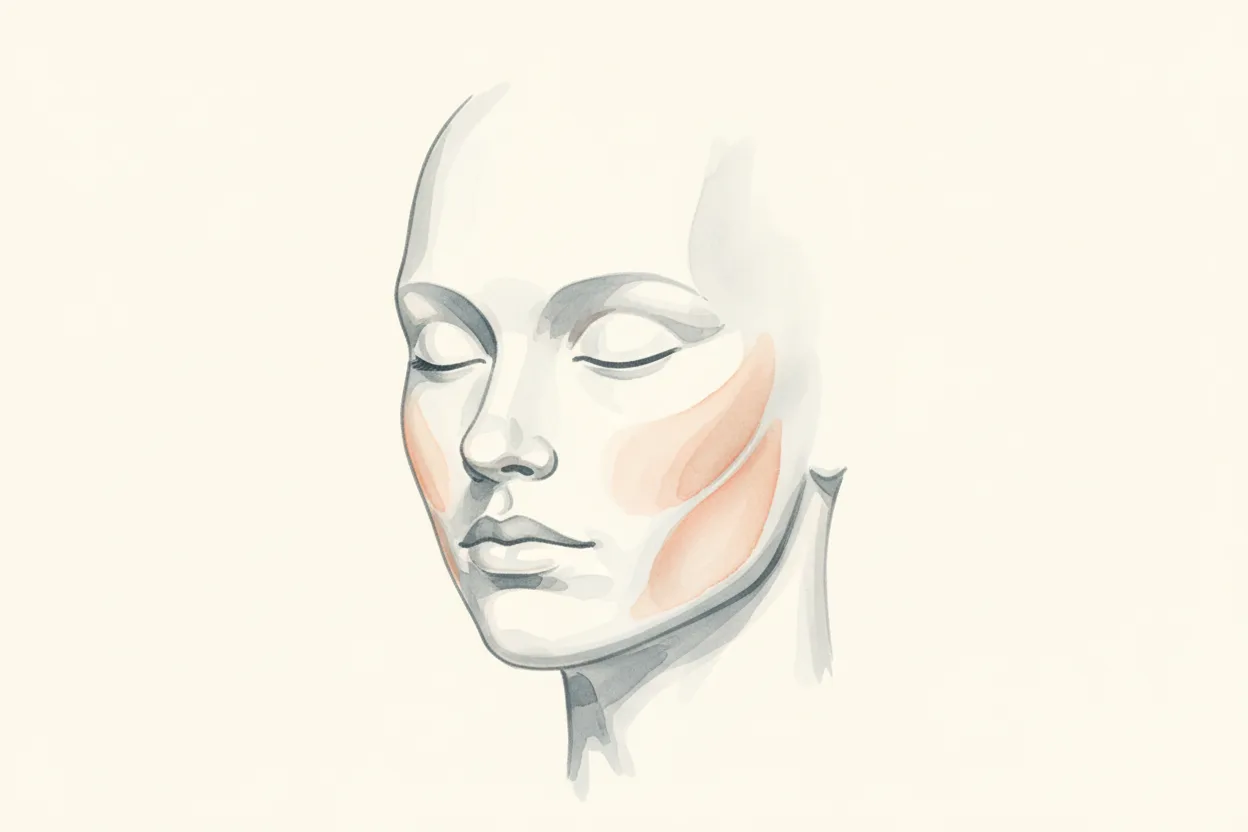
The first layer is lost volume, and it shows most where fat gives the face its shape. Cleveland Clinic lists the usual signs: sunken cheeks, thinner fat pads around the eyes, less fullness in the lips, and cheekbones or a jawline that suddenly look sharper because there is less padding over them.
The temples are part of the picture too. Plastic surgeons writing for the American Society of Plastic Surgeons talk about rebuilding support in the cheeks and temples after GLP-1 weight loss.
Lost volume also changes how your lines look. A second Cleveland Clinic article on GLP-1 appearance changes points out that when the cheeks look less full, the lines and wrinkles you already had become easier to see. So a face that “suddenly has wrinkles” is often a face that has lost some of the volume that used to smooth them out.
A simple way to check: put a photo from before your weight loss next to a recent one, taken in similar light. If the difference is mostly hollows and flat spots, volume is your main layer.
Layer Two of Ozempic Face: Skin That Has Not Caught Up
The second layer is loose skin. After fast weight loss, the skin can be left a little bigger than the shape underneath it. Cleveland Clinic’s GLP-1 article says some people develop mild skin laxity, which can make the face look older than it did before. Its Ozempic face article describes the same thing lower down: drooping skin on the cheeks and jaw, which most of us would call jowls.
Volume loss and loose skin often show up together. One of the surgeons in the ASPS article notes that volume loss often comes with tissues moving lower and skin loosening, and that when laxity is present, more than volume may be needed to fix it. Cleveland Clinic adds that as skin loses collagen, fine lines and wrinkles start to appear.
A simple way to check: look at your jawline and lower cheeks in the mirror. If the skin there looks like it has dropped or softened at the edges, rather than just hollowed, you are looking at laxity as well as volume.
Matching Each Layer of Ozempic Face to a Treatment Type
Lost volume is usually a filler conversation, and loose skin is usually a skin tightening conversation. Plenty of faces need a bit of both. Cleveland Clinic names cosmetic fillers and skin tightening procedures as options for wrinkles and sagging after rapid weight loss, and it also notes the change doesn’t need treatment unless you want it treated.
Here’s how the options line up with each layer:
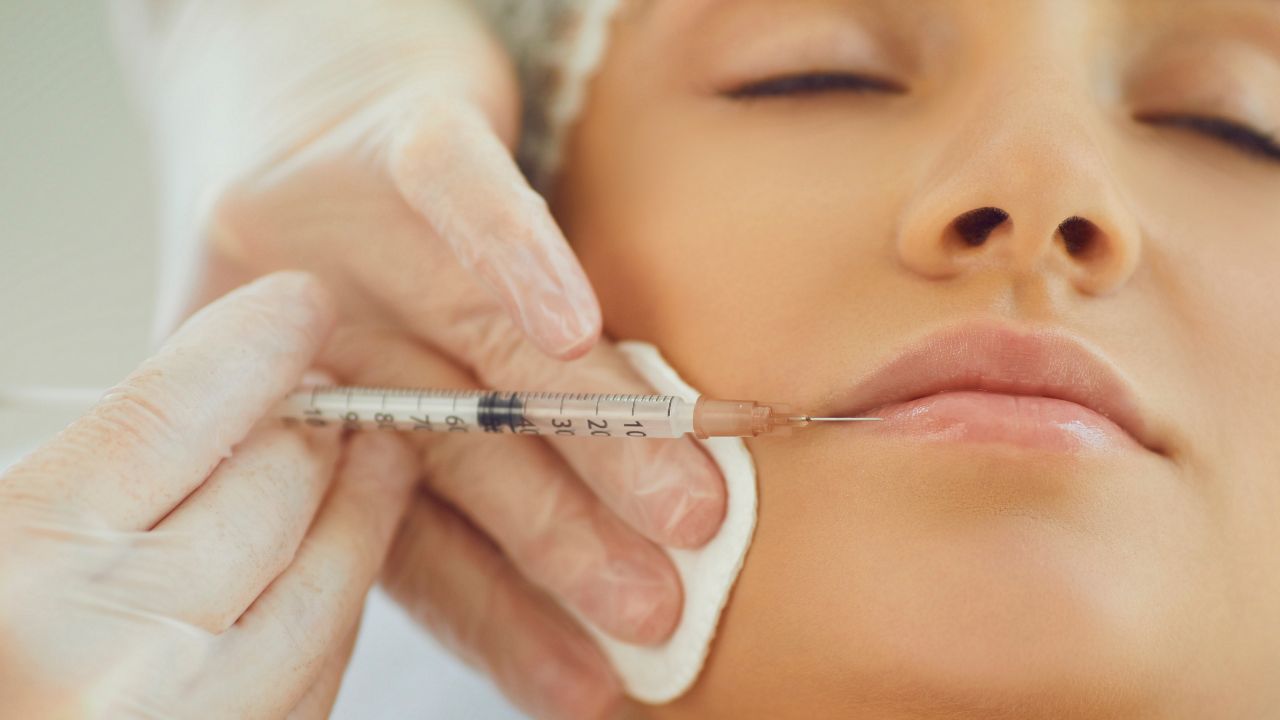
- For lost volume: dermal fillers put volume back where it has gone. ZenVita uses both hyaluronic acid (HA) fillers and calcium hydroxylapatite fillers such as Radiesse. The surgeons in the ASPS article describe fillers as a good fit for subtle, targeted correction, with temporary results.
- For loose skin: Cleveland Clinic says radiofrequency (RF) skin tightening may help improve wrinkles and the overall look of the skin. ZenVita’s skin tightening options include XERF, a needle-free RF treatment, and Morpheus8, which is RF microneedling.
- For collagen over time: hyperdilute Radiesse is a more diluted form of the Radiesse filler. A 2018 expert consensus published in Dermatologic Surgery reports that diluted and hyperdiluted calcium hydroxylapatite encourages new collagen to improve laxity and skin quality, and it describes this as an off-label use with preliminary guidelines. It is aimed at skin quality rather than at filling a hollow.
- For expression lines: Cleveland Clinic mentions Botox alongside fillers for smoothing lines that look deeper after weight loss.
Two limits to know about. First, more filler is not always better. The ASPS article mentions the overfilled look that can come from using too much, so the aim is to replace what was lost, not to rebuild the face you had at a heavier weight. Second, when there is a lot of loose skin, ASPS surgeons point to surgery such as a facelift, which Cleveland Clinic also lists as an option. If that’s where your face is, it is worth hearing early.
If you are considering cheek filler in particular, read our guide to the signs to wait before cheek filler before you book.
When to Treat Ozempic Face: Why Some Clinicians Wait Until Weight Is Stable
Many clinicians prefer to treat the face once your weight has settled. One surgeon quoted by the ASPS prefers to wait until weight has stabilized because treating too early raises the risk of correcting too little or too much. Another says patients should ideally be at or near a stable weight, with a long-term plan for their GLP-1 use. They were talking about fat grafting, but the logic carries over: if your face is still changing, the result may not match your face a few months later.
Weight that comes back matters too. The American Academy of Facial Plastic and Reconstructive Surgery quotes one of its surgeons warning that if the weight returns, filler that wasn’t placed precisely can start to look distorted.
That doesn’t mean doing nothing while you lose weight. Cleveland Clinic’s suggestions for limiting the change are practical ones:
- Slower loss: aim for about one to two pounds a week.
- Enough protein: it helps you build muscle while you lose fat.
- Water: staying hydrated helps your skin stay elastic.
- Sunscreen: wear it every day.
Your pace of weight loss is a question for whoever prescribes your medicine. If you are in the ZenVita weight loss program, you see the same nurse practitioner each month, your dose is adjusted to how your body is responding, and skin tightening and body contouring are available as your weight comes down. That makes it easier to plan the face and the scale together.
Questions to Bring to Your Consultation if You Are on a GLP-1
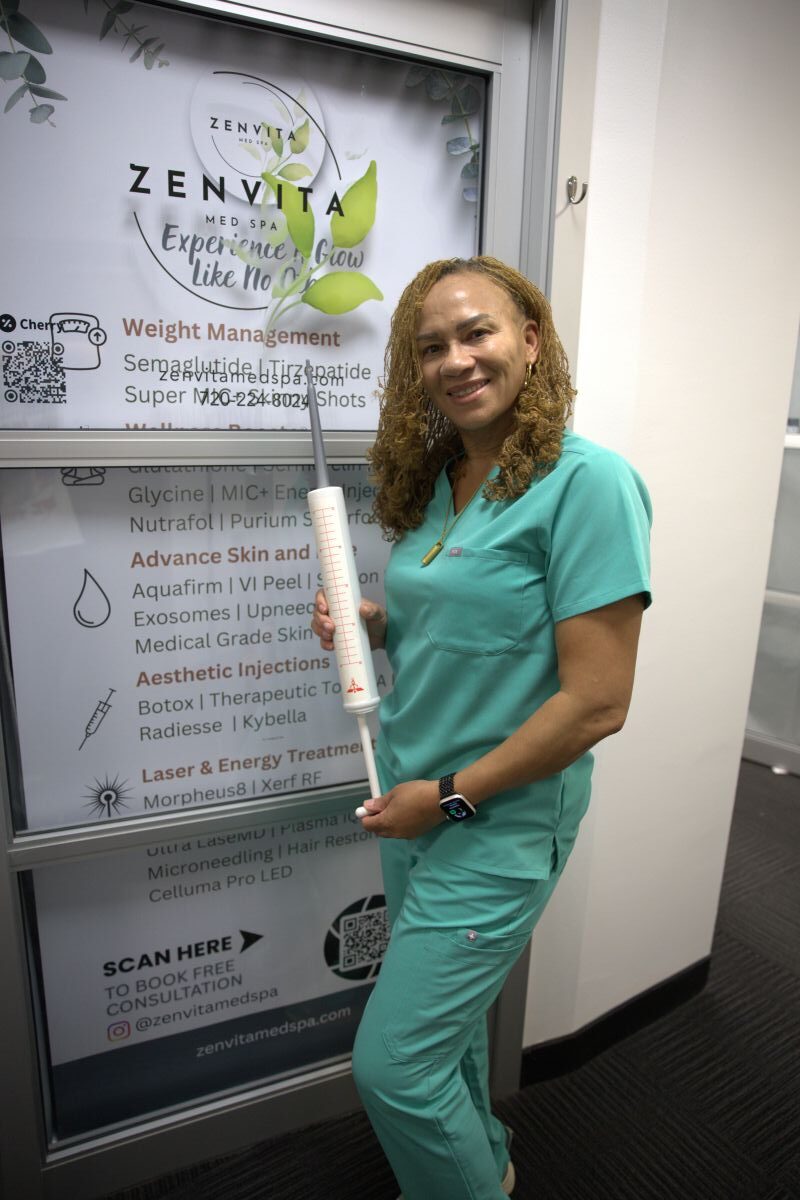
The best consultation for Ozempic face starts with where you are in your weight loss, not with a syringe. Bring a photo from before you started, and bring these questions:
- How much more weight do I expect to lose, and how fast?
- Is the main change in my face lost volume, loose skin or both?
- Would you treat now, or wait until my weight is stable, and why?
- Which treatment fits each layer, and how many visits would that take?
- What happens to the result if my weight changes again?
- What are the side effects and risks of the treatment you’re suggesting?
A good answer to these will sound like a plan with a timeline, not a promise. Faces respond differently, and your provider should explain what they can and can’t change.
Ozempic Face FAQs
Does Ozempic face go away on its own?
Usually not while the weight stays off. Cleveland Clinic says Ozempic face won’t fade with time, and if you keep the weight off, the change in your face is likely to stay too. If weight comes back, the face may look fuller again. That is why many people choose to wait until their weight is stable before treating the face.
Can you prevent Ozempic face?
You can lower the odds. Cleveland Clinic suggests slower weight loss of about one to two pounds a week, enough protein to protect muscle, plenty of water and daily sunscreen. Talk to your prescriber about the pace that suits you. Not every face changes, and age and how fast the weight comes off both play a part.
Is filler or skin tightening better for Ozempic face?
It depends on which layer changed. Hollow cheeks, temples and under eyes point to lost volume, which filler can replace. Softening along the jaw and lower cheeks points to loose skin, where RF skin tightening may help. Many faces show both, so a plan often combines the two over several visits rather than relying on one treatment.
Should I stop my GLP-1 medicine because of my face?
That is a decision for you and your prescriber. Cleveland Clinic notes that prescribers watch how fast you are losing weight and may lower the dose or pause the medicine if they have concerns. If your face worries you, raise it at your next check-in so your weight goals and your face can be planned together.
Book an Ozempic Face Consultation in Aurora
If your face has changed with your weight loss, a consultation is the place to sort out which layer you are dealing with and when to treat it. ZenVita Medspa Aesthetics and Wellness is a nurse-practitioner-led clinic in Aurora, seeing clients from across the Denver area. Book your consultation at ZenVita and bring your before photo along.